Phinite Team · March 2026 · 8 min read
AI Agent Sprawl Is Already Here — And Most Enterprises Have No Plan for It
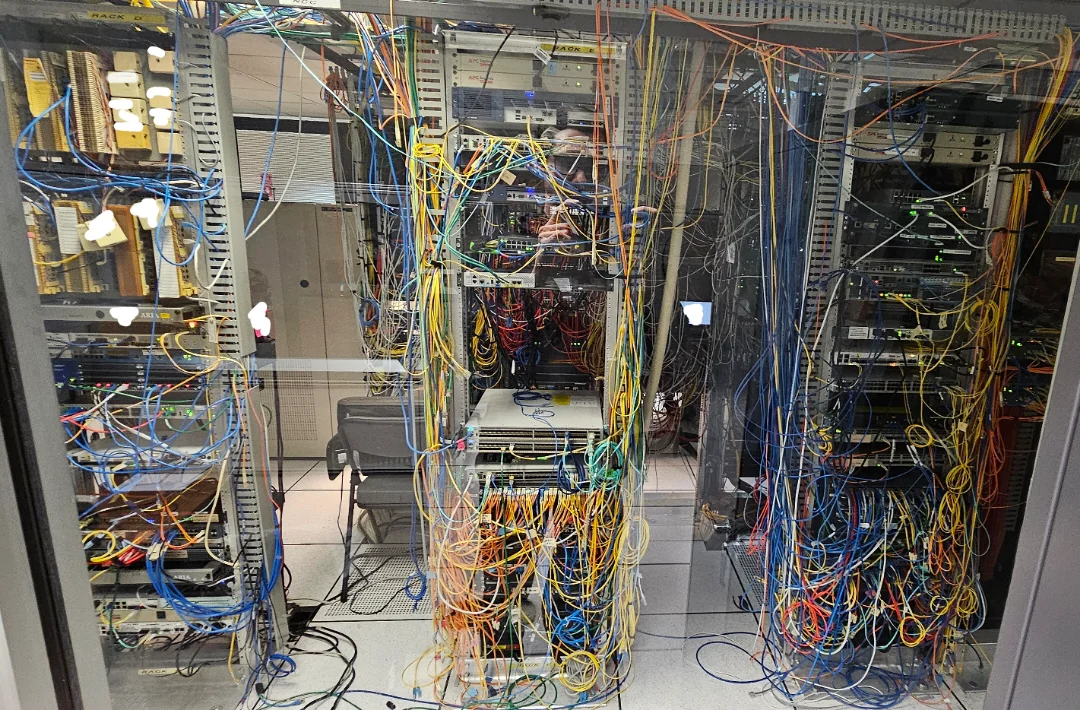
By 2028, Fortune 500 companies are projected to run over 150,000 AI agents — up from fewer than 15 in 2025. That growth trajectory is not a forecast most enterprise leaders have internalized, and the governance infrastructure to manage it is almost nowhere in sight. This article examines what AI agent sprawl looks like in practice, why it happens faster than teams expect, and why a governance-first architecture is the only credible response before the problem becomes structural.
The Numbers Are Already Alarming
Gartner projects that Fortune 500 companies will have more than 150,000 AI agents deployed by 2028. In 2025, the typical enterprise had fewer than 15. That is a more than 10,000x increase in four years. More striking than the number itself is the velocity. The jump from 15 to 150,000 agents does not happen gradually — it happens in waves, as different teams in different departments independently discover what AI agents can do for their specific problems and build or adopt solutions without central coordination.
Only 13 percent of organizations report having proper governance in place for their current AI agent deployments. This means that the majority of enterprises moving fastest on AI agents are also moving fastest without the management infrastructure to understand, secure, or control what those agents are doing. The combination of high velocity and low governance coverage is precisely what defines a sprawl problem — and by the time most organizations recognize it, the agents are already in production.
What Agent Sprawl Actually Looks Like
Sprawl is not a single deployment that grew too large. It is the accumulation of many independent deployments that were never designed to be managed together.
The pattern is recognizable. A finance team deploys an agent to automate accounts payable reconciliation. An HR team deploys a separate agent to handle onboarding workflows. A customer success team deploys another to process support tickets. A sales team builds an agent to qualify inbound leads. Each of these deployments is defensible in isolation. Each was built by a team with legitimate business requirements and a framework that worked for their use case. Together, they create an estate of agents that no single team owns, no single system monitors, and no single policy governs.
The inventory problem. The first symptom of sprawl is that no one in the organization can produce an accurate count of how many agents are running. Not because records do not exist — they exist in fragments, across different team wikis, deployment logs, and vendor dashboards — but because there is no centralized registry. When a CISO asks how many AI agents have access to customer data, there is no reliable answer. When a compliance team asks which agents processed regulated data last quarter, there is no way to answer with confidence.

“Sprawl is not one deployment that grew too large — it is dozens of independent deployments that were never designed to coexist”
Why Sprawl Happens
Agent sprawl is not the result of carelessness. It is the predictable output of how enterprise AI adoption actually works.
Bottom-up adoption. AI agents are primarily adopted bottom-up, not top-down. Individual teams discover a capability, build a solution, and deploy it to solve a real problem. There is rarely a central architecture function fast enough to evaluate, approve, and guide each of these deployments before they go live. By the time a central team becomes aware of a deployment, it is often already in production and already handling real data.
Framework proliferation. The current AI agent landscape offers dozens of frameworks — LangChain, LlamaIndex, CrewAI, AutoGen, Semantic Kernel, and more. Teams choose the framework that best fits their technical context, which means different teams end up with different, incompatible implementations. Each framework has its own logging format, its own tool call interface, and its own deployment model. There is no common management language between them at the infrastructure level — which means each new framework adds a new governance gap.
Speed over structure. AI agent deployment cycles are fast — often faster than traditional software. A team can go from prototype to production in days. This speed is genuinely valuable, but it outpaces the governance processes that organizations have built for slower deployment cycles. The result is a growing backlog of agent deployments that have never been reviewed for security, compliance, or policy alignment.
The Cost of Ungoverned Agent Sprawl
The cost is not immediately visible, which is part of why it persists. Sprawl costs accumulate slowly and then surface suddenly.
Security surface expansion. Every agent is a potential attack surface. Agents that call external APIs, access internal databases, or communicate with other agents create new entry points that are only as secure as their weakest integration. An inventory that does not exist cannot be secured. Organizations discover their actual exposure during incidents, not audits — which is the most expensive way to discover it.
Compliance liability. GDPR, HIPAA, and SOC 2 all require demonstrable controls over systems that access regulated data. If an enterprise cannot enumerate which agents have accessed which data, it cannot demonstrate compliance with any of these frameworks. Regulators increasingly consider AI agents within scope — and the absence of documentation is itself a finding. The liability is not hypothetical; it accumulates with each unlogged access event.
Operational fragility. Agents built without coordination become dependent on each other in undocumented ways. When one agent changes behavior or fails, downstream agents that relied on it may fail silently. Without a unified monitoring layer, these cascading failures are invisible until a business outcome is affected. The fragility is proportional to the sprawl — the more agents, the more undocumented dependencies, the more opaque the failure modes.

“Sprawl costs — security exposure, compliance liability, operational fragility — compound faster than they become visible”
What Governance-First Architecture Prevents
The alternative to sprawl is not slower deployment. Governance-first architecture allows teams to move quickly while ensuring that every new agent deployment is visible, managed, and compliant from the moment it is added to the estate.
A centralized agent registry makes the inventory problem tractable. Every agent, regardless of which framework it was built on or which team deployed it, is registered in a single place with its data access scope, its tool permissions, and its deployment history. This is the baseline from which security, compliance, and operations can work. Without it, none of the other governance mechanisms function reliably.
A common observability layer means that logs, decision traces, and runtime monitoring are captured in a consistent format across all agents. Teams can build on a single monitoring infrastructure rather than instrumenting each agent independently. Anomalies are detectable across the estate, not just within individual agent deployments.
Policy enforcement at the platform layer means that organizational rules — data access restrictions, action limits, output validation requirements — apply to all agents, not just the ones that were specifically configured to follow them. This is the difference between governance as a checklist and governance as an architectural property. A checklist is only as good as the last item checked. An architectural property is always on.
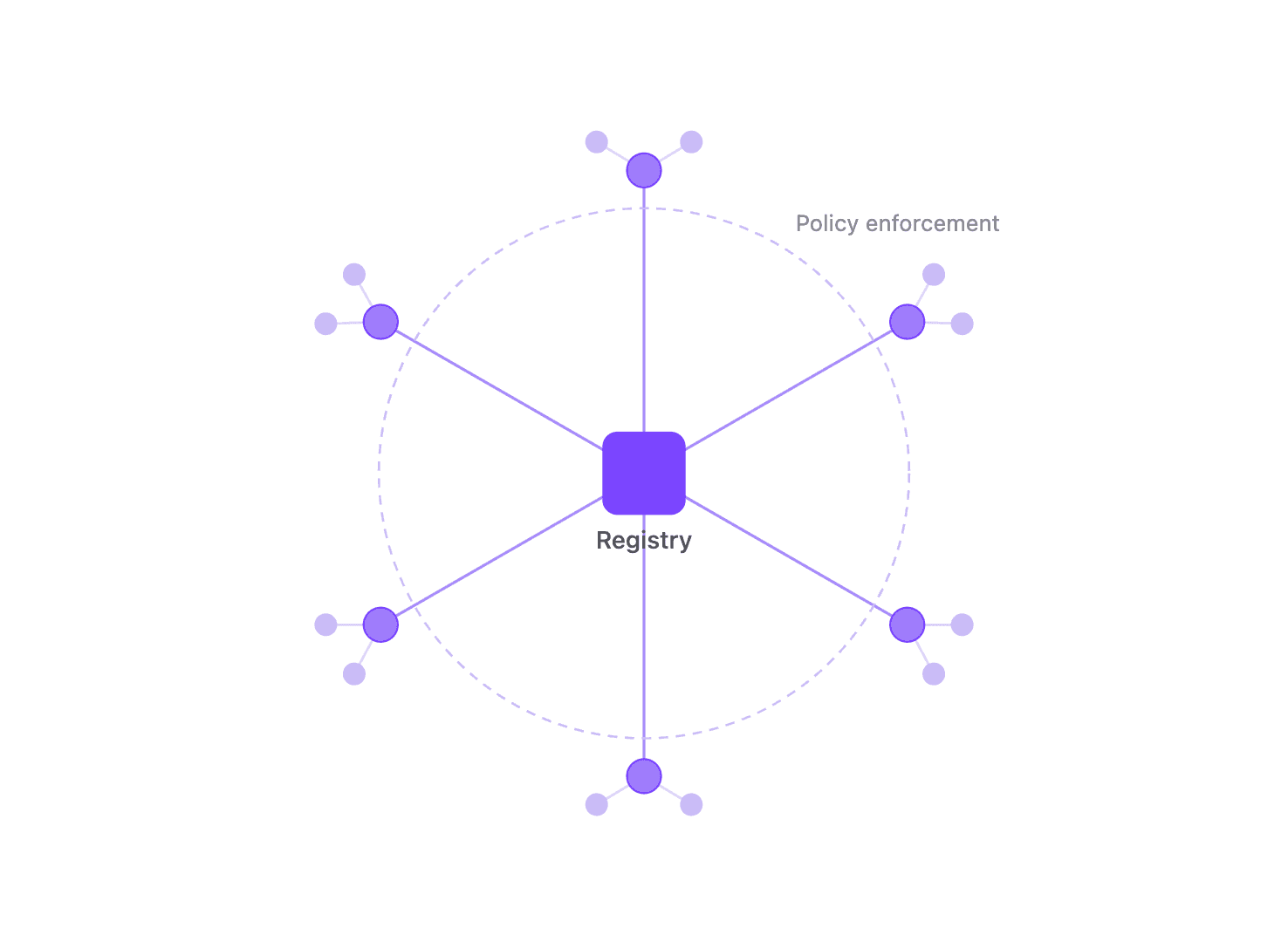
“Governance-first architecture makes velocity sustainable — agents deploy fast, but into a managed environment”
Key Takeaways
AI agent sprawl is not a hypothetical future problem — it is already underway in most large enterprises, accelerated by bottom-up adoption, framework proliferation, and deployment cycles that outpace traditional governance processes. The organizations that manage it effectively are the ones that treat governance as an architectural requirement from the start, not a remediation project for after the sprawl becomes unmanageable. A centralized agent registry, a common observability layer, and policy enforcement at the platform level are the structural pieces that make scale sustainable.
Frequently Asked Questions
How many AI agents does the average enterprise have deployed today?
What is the difference between AI agent governance and AI governance?
How do organizations start addressing agent sprawl after it has already occurred?
Is agent sprawl a problem for smaller organizations?
What should the CISO’s first question be about AI agents?
Other Blogs

AI Agent Cost Attribution: How to Track and Control Multi-Agent Spend
Phinite Team · 22 July 2026 · 4 min read

AI Agents for Sales Teams: Automating Outbound Research and Lead Qualification
Phinite Team · 22 July 2026 · 4 min read

AI Agents in Customer Support: Build vs Buy and What to Automate First
Phinite Team · 22 July 2026 · 4 min read