Phinite Team · March 2026 · 8 min read
The AI Agent Audit Trail Checklist for GDPR, HIPAA, and SOC 2

AI agents are now executing tasks that touch regulated data — health records, financial information, personally identifiable information — across enterprise environments every day. But most orchestration frameworks were built to make agents work, not to make them compliant. GDPR, HIPAA, and SOC 2 each define specific requirements that an AI agent audit trail must meet, and most current implementations fall short. This article defines exactly what each framework requires, where current implementations commonly fail, and what a complete, compliance-ready audit trail looks like in practice
Why AI Agent Compliance Is Different
Compliance in traditional software is primarily a question of access control: who can access what data, under what conditions. AI agent compliance is a more complex problem. Agents do not just access data — they reason about it, transform it, pass it to external services, generate outputs based on it, and take actions on its basis. The audit trail needs to capture all of this, at every step, in a way that is attributable, legible, and retrievable.
Most enterprise compliance teams are just beginning to grapple with this. The regulations themselves predate the current generation of AI agents, but their requirements do not disappear because the technology is new. Regulators have been explicit: AI systems that process regulated data fall within scope of existing frameworks. The obligation is on organizations to demonstrate how. The gap is architectural. Frameworks like LangChain, CrewAI, and AutoGen provide excellent orchestration capabilities, but their default logging behavior is designed for debugging, not for compliance. What compliance requires is different in kind, not just degree.
What GDPR Requires from AI Agent Audit Trails
GDPR requirements for AI agent audit trails center on three principles: data minimization, purpose limitation, and accountability.
Data minimization in practice. An agent that processes personal data should access only the data it needs for the specific task at hand. The audit trail must demonstrate that this constraint was enforced — not just assumed. This means logging exactly which data fields were accessed by the agent, in what context, and for what stated purpose. If an agent accessed a user’s email address to send a notification but also retrieved their date of birth without a stated purpose, that access is a potential violation — and the audit trail must make it visible.
Purpose limitation and consent linkage. GDPR requires that data is used only for the purpose for which it was collected. For AI agents, this means the audit trail must document the task the agent was executing and demonstrate that each data access was necessary for and proportionate to that task. Where consent records exist, they must be linkable to the agent’s specific data access events. An audit that cannot connect “user consented to X” with “agent accessed Y for purpose X” does not satisfy the accountability requirement.
The right to explanation. GDPR Article 22 requires that individuals have the right to meaningful information about automated decisions that significantly affect them. For AI agents making such decisions, the audit trail must be detailed enough to produce a human-legible explanation of how the decision was reached — what inputs were considered, what reasoning was applied, and what output was produced. This is not optional logging. It is a legal obligation attached to every consequential automated decision.
GDPR Requirement | What the Audit Trail Must Capture |
|---|---|
Data minimization | Exact fields accessed, task context, stated purpose per access event |
Purpose limitation | Task description, data-access justification per step |
Right to explanation | Decision inputs, reasoning trace, output attribution |
Consent linkage | Consent record ID connected to each personal data access |
Data retention | Timestamp, retention period classification, deletion confirmation |
Breach notification | Full action log enabling scope assessment within 72-hour window |
What HIPAA Requires from AI Agent Audit Trails
HIPAA audit trail requirements for AI agents center on protected health information (PHI): who accessed it, when, from where, and what they did with it. The HIPAA Security Rule imposes these requirements on any covered entity or business associate whose systems process electronic PHI — which now includes any AI agent operating in a healthcare or adjacent environment.
Access logs for PHI at the individual level. The HIPAA Security Rule requires that covered entities maintain audit controls for all activity involving electronic PHI. For AI agents, this means every access to a record containing PHI must be logged with timestamp, agent identity, task context, and the nature of the access. Aggregate logs — “the agent processed 500 records today” — are insufficient. HIPAA requires individual-level access records that can be queried by patient identifier, date range, or agent identity.
Transmission security and logging. Any PHI transmitted by an agent — to an LLM inference API, to a downstream service, to another agent — must be logged. This includes the destination, the nature of the content transmitted, and evidence that transmission was encrypted. Many current implementations transmit PHI to external LLM APIs without logging this transmission at all, which creates both a HIPAA violation and a security gap. The audit trail must be able to answer: where did this patient’s data go, in what form, and when?
The minimum necessary standard documented. Similar to GDPR data minimization, HIPAA requires that only the minimum necessary PHI is used for a given purpose. But documentation of this is not self-evident — the audit trail must make it demonstrable. For each task, what PHI was accessed, and why was each element necessary? This is the standard an auditor will apply.
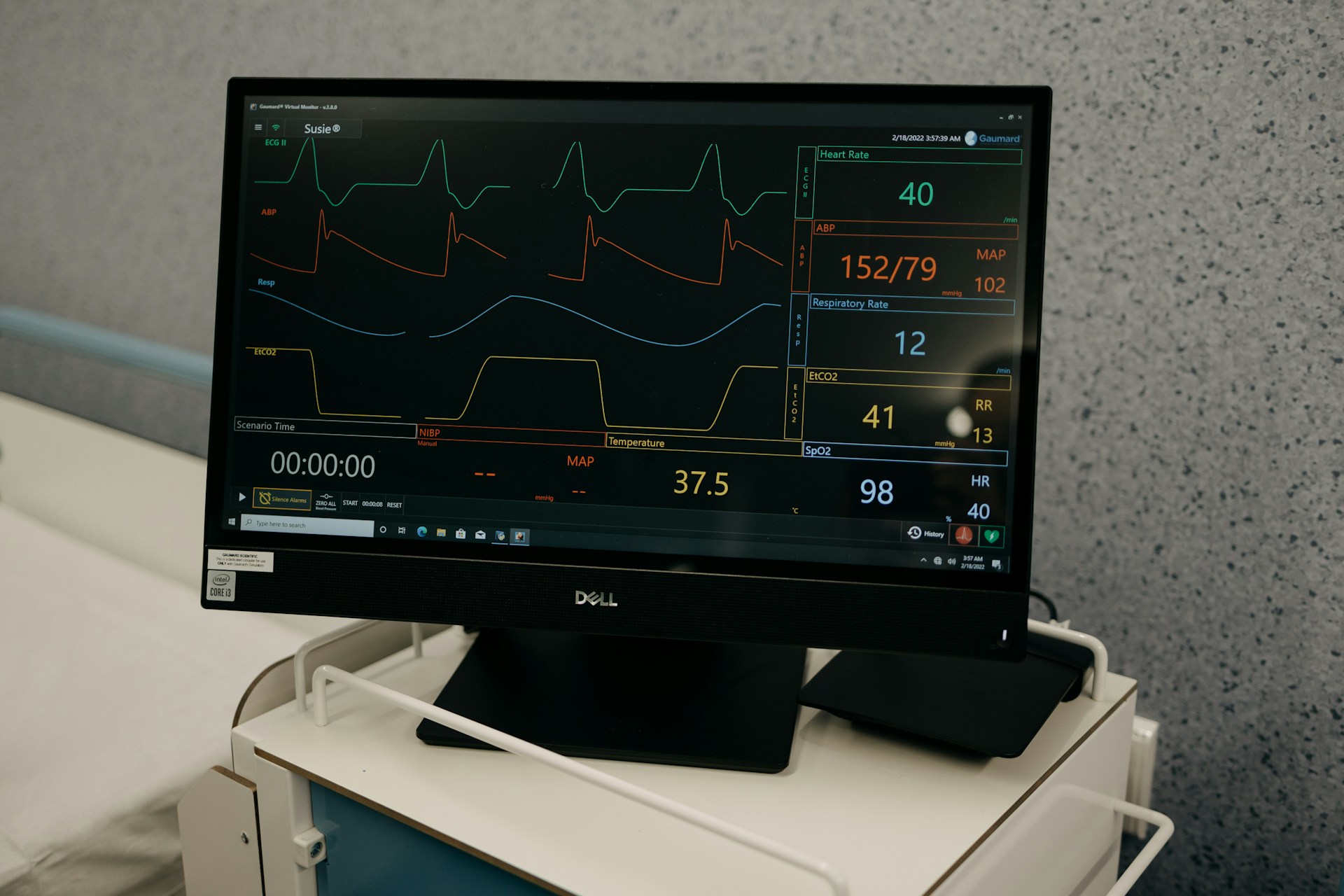
HIPAA requires individual-level access records for every PHI interaction — aggregate logs do not meet the standard
HIPAA Requirement | What the Audit Trail Must Capture |
|---|---|
Access controls | Agent identity, timestamp, PHI record ID, access type (read/write/transmit) |
Audit controls | All ePHI access events, queryable by date, agent, and patient identifier |
Transmission security | Destination system, encryption confirmation, content classification |
Minimum necessary | Justification for each PHI field accessed in context of the task |
Breach assessment | Full access log enabling 60-day retrospective reconstruction |
Business associate | Agent vendor classification, BAA coverage, data handling terms |
What SOC 2 Requires from AI Agent Audit Trails
SOC 2 Type II audits assess whether an organization has effective controls in place over a defined period — typically twelve months. For AI agents, this creates a continuous logging requirement rather than a point-in-time documentation exercise. The auditor is not asking “are controls in place?” They are asking “can you demonstrate that these controls operated consistently, over the audit period, for every system in scope?”
Logical access controls with evidence. SOC 2 common criteria require that access to systems processing sensitive data is restricted to authorized entities. For AI agents, this means demonstrating that agents can only access the systems and data within their defined scope — and that any unauthorized access attempts were detected and logged. An agent that has broad access permissions and uses them within bounds does not satisfy this requirement. The audit trail must show that access was scoped, not just that it was appropriate in practice.
Change management over the audit period. SOC 2 requires documentation of changes to in-scope systems. When an agent’s prompt, tools, configuration, or model version changes, that change should be versioned and logged with a timestamp and an authorization record. If an agent’s behavior changes between audit periods, the auditor needs to trace what changed, when, and under whose approval. Configuration drift with no change record is a finding.
Incident response documentation. SOC 2 also covers how the organization responds to availability and security incidents. For AI agents, this means logging failures, timeouts, anomalous outputs, and error conditions, along with evidence that incidents were detected and responded to within defined timeframes. An agent that fails silently — with no error log and no alert — will produce a gap in the audit record.
SOC 2 Requirement | What the Audit Trail Must Capture |
|---|---|
Logical access | Authorized scope definition, access events, unauthorized attempt detection |
Change management | Configuration versions, change timestamps, authorization records per change |
Incident response | Errors, timeouts, anomalous outputs, escalations, resolution timestamps |
Availability | Uptime events, SLA performance data, failure mode classifications |
Monitoring | Continuous log coverage across the full 12-month audit period |
What Most Orchestration Platforms Get Wrong
The most consistent gap across LangChain, CrewAI, and AutoGen implementations is that their default logging is designed for developer debugging, not compliance auditing. Three specific problems appear almost universally.
Insufficient granularity. Default logs capture inputs and outputs at the workflow level. Compliance requires action-level logging — every tool call, every external API request, every data access, with timestamps and task context. Workflow-level logs are too coarse for a compliance review. An auditor reviewing what data the agent accessed cannot determine this from an input/output log. They need the individual access events.
No identity attribution chain. Compliance audit trails need to know not just what happened, but under whose authority it happened. Default framework logging captures agent activity but typically does not log which human user, which organizational role, or which authorization policy triggered the agent’s task. This attribution chain — from human authorization to agent action — is a requirement for GDPR, HIPAA, and SOC 2 alike. Without it, the audit trail documents events but not accountability.
No compliant retention infrastructure. Audit logs need to be retained for defined periods — one to seven years depending on the framework and jurisdiction. Most default logging implementations write to ephemeral storage or rotating log files without a compliant retention policy. The logs that exist today may not exist when an audit requires them. Retention is not a storage cost decision. It is a compliance requirement.

Default framework logging answers debugging questions. Compliance audit trails answer accountability questions — and they are not the same document
The Complete Audit Trail Checklist
A compliance-ready AI agent audit trail must include all of the following. Any gap becomes a finding in an audit or an unanswerable question in a breach assessment.
Task initiation record — who initiated the task, when, with what stated purpose and authorization
Agent identity — which agent version, which model, which configuration was active at execution time
Data access log — every record or field accessed, with timestamp, task context, and stated purpose
Tool call log — every external API, database query, or service call, with request metadata and response status
Reasoning trace — a structured summary of agent decision steps sufficient to produce a human-legible explanation
Output log — what the agent produced, where it was sent, in what format, and to whom
Human authorization record — which human or system authorization policy permitted the task and the agent’s scope
Transmission log — every data transmission, including destination, content classification, and encryption confirmation
Change log — version history of agent configuration, prompt, model, and tool permissions with timestamps and approvals
Retention confirmation — log storage location, retention period classification, and deletion schedule
Incident log — any errors, escalations, anomalous outputs, or threshold violations with response timestamps
Key Takeaways
GDPR, HIPAA, and SOC 2 each place specific, auditable requirements on AI agents that touch regulated data — and those requirements go well beyond what most orchestration frameworks capture by default. A compliance-ready audit trail must capture action-level detail, a human authorization record, data access justification, and transmission logs, retained in durable storage for defined periods. The gap between current default implementations and compliance requirements is architectural, not cosmetic. Closing it requires treating the audit trail as a first-class infrastructure requirement from the start of the agent design process, not as an afterthought added before an audit.
Frequently Asked Questions
Does GDPR apply to AI agents that only process data within the EU?
Do AI agents that only use anonymized data need HIPAA compliance?
How long must AI agent audit logs be retained under SOC 2?
What is the biggest audit trail gap in common AI agent frameworks?
If our LLM provider stores conversation logs, does that satisfy the audit trail requirement?
Other Blogs

AI Agent Cost Attribution: How to Track and Control Multi-Agent Spend
Phinite Team · 22 July 2026 · 4 min read

AI Agent Sprawl Is Already Here — And Most Enterprises Have No Plan for It
Phinite Team · March 2026 · 8 min read

AI Agents for Sales Teams: Automating Outbound Research and Lead Qualification
Phinite Team · 22 July 2026 · 4 min read