Phinite Team · 22 July 2026 · 5 min read
What Is an AI Agent Registry? Definition, Benefits, and How It Works

As organizations move from one or two pilot agents to dozens or hundreds, a new question shows up: does someone else in the company already have something like this? An AI agent registry is the infrastructure that answers that question, giving teams a shared, governed catalog of agents instead of a graveyard of one-off scripts nobody can find or trust. This article explains what a registry actually does, why sprawl makes one necessary, and how to tell if you need one yet. New to the category? Start with what a multi-agent AI platform actually is.
Why “Just Build an Agent” Stops Working at Scale
Enterprises now average 12 AI agents in production, with that number projected to reach 20 within two years (Salesforce 2026 Connectivity Benchmark). Some surveys put the real figure much higher, with a reported mean near 37 agents per organization and 38% of companies already running more than 100. At that volume, informal tracking in a spreadsheet or a Slack channel stops working.
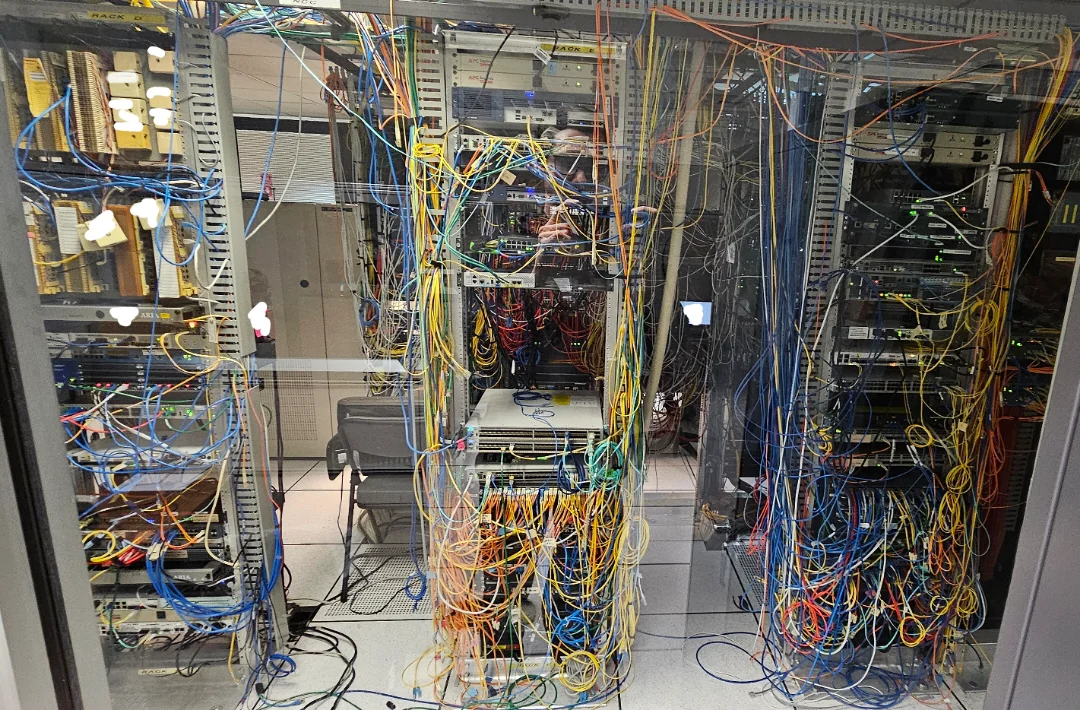
The Wall Street Journal has reported that companies are seeing independently developed bots duplicate each other’s functions, straining both IT governance and budgeting. Two teams solving the same problem with two different agents isn’t a hypothetical risk at this scale; it’s the default outcome of agent-building becoming easy enough for any team to do on its own.
That’s not an argument against letting teams build agents. It’s an argument for giving those agents somewhere to live once they exist, so the next team doesn’t start from zero.
What Sprawl Actually Costs
The numbers on ungoverned agents are stark. An estimated 50% of enterprise agents run in isolated silos with no shared context or unified governance, and 27% of the API connections between agents are completely ungoverned (IBM). Only 12% of organizations report having a centralized platform to govern their agents at all.
That gap shows up as a trust problem more than a technical one. When 94% of organizations say agent sprawl is increasing complexity, technical debt, and security risk, even as 96% are already using agents in some capacity, the issue isn’t whether to adopt agents. It’s whether anyone can say with confidence what agents are running, who owns them, and what they’re allowed to touch.
Left unaddressed, this is expensive in a very literal sense. Gartner projects that over 40% of agentic AI projects will be canceled by the end of 2027, citing escalating costs, unclear business value, and inadequate risk controls as the drivers, not model quality.
What an Agent Registry Does
A registry is a shared catalog that treats agents as reusable, governed assets rather than disposable scripts. It solves a narrower problem than a full orchestration platform, but it’s the problem sprawl statistics point to most directly – and the exact gap our comparisons with AutoGen, the OpenAI Agents SDK, and Amazon Bedrock Agents keep surfacing.
Discovery. Before a team builds a new agent, a registry lets them check whether one already exists that does most of what they need, cutting duplicate work at the source rather than after the fact.
Version control and rollback. As an agent’s prompts, tools, or logic change over time, a registry tracks what changed and when, so a regression can be traced to a specific version and reverted without guesswork – the same discipline that makes evaluation actually work.
Governance metadata. Ownership, permissions, and audit history attach to the agent itself in the registry, not to a person’s memory of who built it or a doc that’s gone stale. That’s the layer that turns “who approved this” from a scramble into a lookup.
How Phinite’s Agent Registry Works
Phinite’s Agent Registry is built around discovery and reuse first. Teams can find, manage, and deploy agents that already exist rather than rebuilding tools from scratch, with pre-built examples like an Outbound Research Agent and Lead Qualification Agent already available in the catalog.
The registry integrates with a team’s existing tools so agents can take direct action, not just generate a response someone else has to act on manually. Combined with orchestration features that let registered agents work together, this shifts the default from “build it again” to “check the registry first,” which is precisely the behavior the sprawl statistics say most organizations are missing.
When You Actually Need One
A registry isn’t the first thing a team building its first agent needs. If you have one or two agents, built and maintained by the same small team, informal tracking is probably fine for now.
The trigger point is usually one of three things: a second team starts building agents independently, an agent starts taking real actions that need an audit trail, or leadership starts asking a question nobody can answer confidently, like how many agents are running or who owns a specific one. Any of these is a signal that the cost of not having a registry has quietly overtaken the cost of setting one up.
Key Takeaways
Agent sprawl isn’t a future risk; the data says roughly half of enterprise agents already run in ungoverned silos, and only 12% of organizations have a centralized way to manage them. An agent registry addresses this directly, giving teams a shared catalog for discovery, versioning, and governance instead of a scramble every time someone asks what’s running and who owns it. The right time to adopt one is before a second team starts building agents independently, not after.
Frequently Asked Questions
How is an agent registry different from a general AI platform?
Do small teams need an agent registry?
What’s the actual cost of not having a registry?
Can an agent registry prevent agent sprawl entirely?
Other Blogs

AI Agent Cost Attribution: How to Track and Control Multi-Agent Spend
Phinite Team · 22 July 2026 · 4 min read
AI Agent Sprawl Is Already Here — And Most Enterprises Have No Plan for It
Phinite Team · March 2026 · 8 min read

AI Agents for Sales Teams: Automating Outbound Research and Lead Qualification
Phinite Team · 22 July 2026 · 4 min read